
Sewayojan login is the gateway for jobseekers, employers, and departmental officers to access Uttar Pradesh’s online employment exchange — a digital platform designed to connect talent with opportunity. Whether you’re a fresh graduate searching for government positions, an employer posting vacancies, or a Sewa Mitra helping residents register, understanding the Sewayojan login process and the portal’s broader purpose is essential. This guide explains everything: history, objectives, step-by-step access, state-level impact, success stories, implementation challenges, comparisons with other schemes, and future prospects — all aimed at helping readers use the Sewayojan login effectively and confidently.
What is Sewayojan and why the Sewayojan login matters
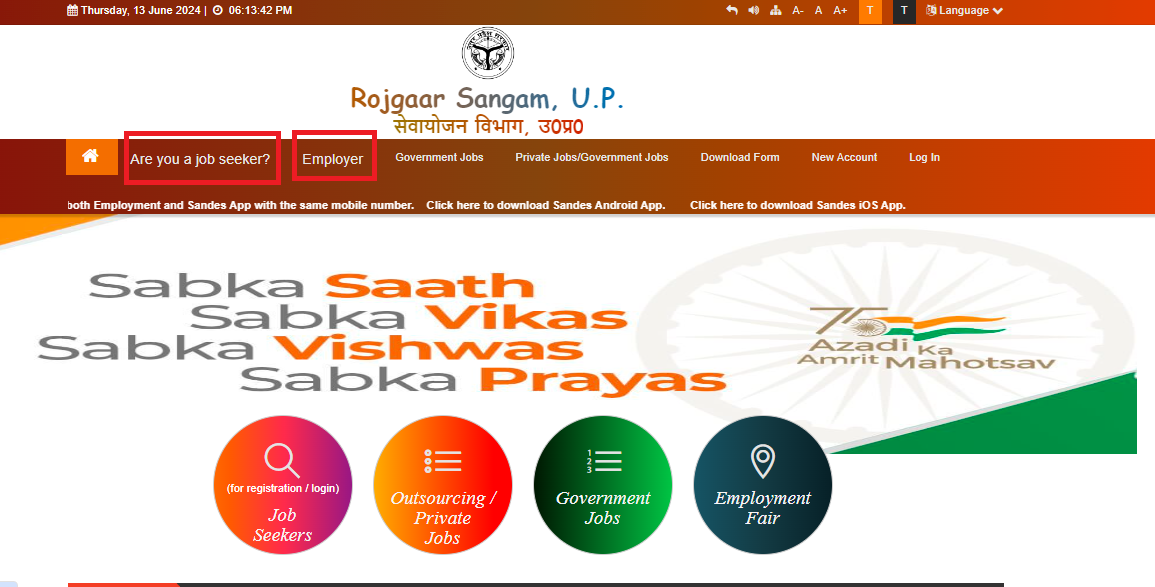
Sewayojan (often referred to as the Sewayojan UP portal or Rojgaar Sangam) is an online employment exchange under the Department of Training and Employment, Government of Uttar Pradesh. The portal modernizes how jobseekers register for vacancies, employers post openings, and officials manage employment drives. The Sewayojan login acts as the authentication point: once logged in, users can update profiles, apply for jobs, verify Aadhaar, access notifications about rojgar melas (job fairs), and track recruitment processes. Official pages describe the portal’s registration and login workflows and list features such as job categories, employer registration, and job-seeker services.
Accessing the Sewayojan login is often the first practical step toward employment opportunities in Uttar Pradesh: it centralizes vacancies (government, private, outsourced, and employment-fair listings) and integrates with district employment offices to facilitate placements. For many jobseekers, the Sewayojan login replaces older offline exchange visits, saving time and bringing transparency to the hiring pipeline. Rojgaar Sangam+1
Who uses the Sewayojan login?
Four primary user types depend on the Sewayojan login:
Jobseekers — to create and maintain profiles, search and apply for jobs, and receive alerts.
Employers and aggregators — to post vacancies, shortlist candidates, and manage recruitment.
Departmental officers and admins — to coordinate placings, run rojgar melas, and monitor scheme outcomes.
Sewa Mitras and facilitation centers (CSCs) — who often assist rural or digitally-excluded residents with registration and Sewayojan login.
A brief history: from employment exchanges to Sewayojan login
India’s formal employment exchange system has roots in the mid-20th century, intended to match returned servicemen and later the broader workforce with vacancies. Over decades, the model evolved from paper registers and in-person visits to digitized listing and, eventually, portals like Sewayojan. Uttar Pradesh modernized its employment services by introducing the Sewayojan web portal to centralize vacancies and introduce a single-sign-on style experience: the Sewayojan login. This move aligned with national e-governance goals and the push to make public services available 24/7.
The shift is significant: where district employment offices previously functioned in isolation, Sewayojan aggregates demand and supply at the state level, while still enabling district-level administration. The Sewayojan login therefore represents not just a technical change but an institutional modernization — enabling better tracking, data-driven policy responses, and improved outreach.
Objectives behind the Sewayojan login and portal
The Sewayojan login supports the portal’s broader objectives:
Universal access: enable jobseekers across districts to view and apply to vacancies anytime.
Single profile system: allow one registration to serve multiple job applications.
Transparency and accountability: track vacancy postings, shortlisting, and placements.
Integration with welfare and skill schemes: link beneficiaries to training, women empowerment programs, and rural development initiatives.
Facilitation of employer outreach: help government and private employers efficiently discover local talent.
By smoothing access through Sewayojan login, the portal aims to increase employment, reduce information asymmetry, and enhance the efficacy of complementary schemes such as skill-training programs, rural livelihood initiatives, and women-centric employment drives.
How to perform Sewayojan login: step-by-step
Accessing the Sewayojan login is straightforward when you follow the steps below. The portal provides specific interfaces for jobseekers, employers, and officials; choose the role that matches your purpose.
Open the official portal: Visit the official Sewayojan site and navigate to the login page. The site provides role selection for Jobseeker, Employer/Aggregator, Departmental Officers, Sewa Mitra, and Admin.
Select your role: Before entering credentials, choose whether you’re a Jobseeker, Employer, or Officer. This determines the dashboard you’ll access after the Sewayojan login.
Enter credentials: Input your User ID and Password (for first time users this will have been created during registration).
Captcha and submit: Enter the captcha or verification code as required and press submit.
First-time verification: New jobseekers must complete Aadhaar verification and profile steps (personal details, contact, education, experience, and physical/disability information where relevant). Sewayojan offers OTP verification for Aadhaar-linked mobile numbers.
Troubleshooting login issues: Use the portal’s “Forgot Password” or helpdesk options if you cannot access your account. Many local CSCs and employment offices also assist with Sewayojan login problems.
Following these steps ensures a successful Sewayojan login and positions you to search vacancies, apply, or manage postings.
Registration and profile completion before Sewayojan login
While the Sewayojan login authenticates users, a complete and optimized profile is the asset that helps get hired. Registration requires identity proof (Aadhaar), educational certificates, and contact details. The portal prompts jobseekers to fill multiple sections: personal, contact, physical details, education, experience, and skill certifications. Upload a clear resume and recent photograph to increase recruiter confidence. Verified Aadhaar makes the Sewayojan login smoother and increases acceptance for government hiring procedures. Sewayojan+1
Tip: update your profile after completing training courses or acquiring new certifications — recruiters filtering by skill will find you more easily after Sewayojan login.
Features available after Sewayojan login
After completing the Sewayojan login, users can access multiple modules:
Job Search and Filters: Apply filters — government, private, outsourced, rojgar mela listings — by district, department, salary range, and qualifications.
Application Tracking: See the status of submitted applications and shortlistings.
Employer Dashboard: Post vacancies, download applications, and shortlist candidates.
Notifications and Alerts: Get customized job notifications based on your profile and preferences.
Rojgar Mela Management: Officials can list events, and jobseekers can apply or register for on-site interviews.
Aadhaar-based Verification and OTP: Secure identity verification for jobseekers to reduce fraud and streamline documentation.
These capabilities underline why successful use of the Sewayojan login is crucial for both seekers and providers of work.
Sewayojan login: state-level impact and regional outcomes
The impact of Sewayojan login can be observed across multiple dimensions:
Increased reach: Rural jobseekers, especially from smaller districts, can access the same job listings as urban candidates through the Sewayojan login, enabling more equitable access to opportunities. District employment office pages promote the portal as the primary registration mechanism. Ghaziabad
Higher transparency: Employers and officers can track recruitment timelines and candidate lists, which reduces favoritism and leakage.
Integration with local initiatives: By linking with skill development, women empowerment schemes, and rural development programs, the Sewayojan login acts as a conduit for beneficiaries to move from training to employment.
Data for policy: Aggregated data from Sewayojan login activities helps policymakers identify districts with high unemployment, skill gaps, and demographic patterns, enabling targeted interventions.
While definitive impact metrics vary by district and year, anecdotal success and portal usage data suggest the Sewayojan login has decreased friction in accessing government and private jobs across Uttar Pradesh.
Success stories that started with Sewayojan login
Stories from beneficiaries underscore the portal’s utility. Examples include young graduates who found state government vacancies after receiving personalized notifications, small-town operators hired at rojgar melas they discovered after logging in, and contractors who matched with local skilled laborers through the employer side of Sewayojan. In several districts, the portal’s job-fair announcements resulted in same-day interviews and rapid hiring rounds — evidence that a well-managed Sewayojan login can catalyze quick placements.
Local employment officers often report cases where youth benefited from integrated training-and-placement drives: they completed skill courses under state schemes, updated certificates in their Sewayojan profile, and received interviews from employers who filtered candidates using those credentials.
Common challenges with Sewayojan login and how to overcome them
No large public portal is free from challenges. Sewayojan login users and administrators report recurring issues — but most have practical fixes.
Digital literacy and access: Not every jobseeker is comfortable with online systems. The solution: leverage Common Service Centers (CSCs), Sewa Mitras, and district employment offices to assist with registration, Aadhaar verification, and Sewayojan login. Ghaziabad
Forgotten credentials and password issues: Use the portal’s “Forgot Password” flows and ensure registration email/mobile are active. Officials recommend recording User IDs safely.
Data quality: Incomplete or inaccurate profiles reduce match rates. Fill every field and upload verified documents to maximize suitability after Sewayojan login.
Server load during major recruitment drives: Large-scale postings can stress servers. Check job announcements in non-peak hours, and use district office computers or CSCs where possible.
Awareness gaps: Some employers or jobseekers do not fully use Sewayojan’s advanced filters. Training sessions and localized outreach can increase effective utilization.
Proactive measures by departments — training camps, helplines, and periodic audits — improve Sewayojan login experiences for the broader public.
Comparing Sewayojan login with other state employment portals
India’s states have varied approaches to online employment exchanges: some have simple listings, others offer robust integration with skill development and welfare programs. Sewayojan stands out through several features:
Role-based access: Specific dashboards for jobseekers, employers, and officers improve workflow clarity.
Rojgar mela integration: Direct support for job-fair organization and candidate registration.
District anchoring: Although state-level, Sewayojan maintains district-based administration, enabling granular interventions.
Compared to more limited online job boards, Sewayojan’s integration with employment offices and training schemes gives it an edge in public-sector placements. However, private job portals often have stronger private-sector reach and intensive recruiter features; Sewayojan bridges the public-private gap by enabling employer registrations and outsourcing listings. This hybrid strength is accessible after Sewayojan login.
How Sewayojan login supports women empowerment and rural development
Sewayojan is not only about placements; it amplifies women’s employment opportunities and rural development outcomes. By listing sector-specific opportunities (e.g., women-centric government schemes, self-help group linkages, and local agro-processing roles) and pushing targeted notifications, the portal aids workforce inclusion. Sewa Mitras and CSCs often prioritize outreach to women and rural youth to help them complete registration and the Sewayojan login process. The resulting access to jobs, training, and welfare supports livelihoods and community resilience.
For example, workers who complete state-sponsored skill programs can link certificates to their Sewayojan profile and receive job matches in nearby enterprises — a direct pipeline from rural training to paid employment.
Governance and policy framework around Sewayojan login
Sewayojan operates within the Department of Training and Employment’s policy framework and aligns with national employment goals. The portal’s design reflects governance priorities: reducing unemployment through transparent vacancy dissemination, enabling evidence-based policy through data collection, and integrating complementary schemes (like skill missions and social welfare initiatives). Regular audits and district-level oversight help ensure that Sewayojan login activity translates into measurable outcomes.
Policymakers rely on Sewayojan’s data streams to design targeted beneficiary interventions — for instance, focusing training resources on districts where Sewayojan login rates are high but successful placements low, indicating skill mismatches rather than demand shortages.
Best practices for jobseekers using Sewayojan login
To maximize results after Sewayojan login, jobseekers should follow these best practices:
Complete your profile: Leave no field blank — recruiters often filter strictly by qualification, district, and skill.
Verify Aadhaar: Aadhaar verification speeds up verification processes required for many government roles and reduces rejection risk.
Set notification preferences: Get alerts for government vacancies, private jobs, and rojgar mela announcements.
Regular updates: Add any new certificates or training to remain visible to recruiters filtering for specific skills.
Use role filters: Target your search to the sector and pay-scale you are eligible for.
Prepare documents: Keep scanned copies of essential documents ready for quick upload and verification after Sewayojan login.
Following these steps increases visibility and the likelihood of being shortlisted.
Best practices for employers and officers using Sewayojan login
Employers and officers should treat the portal as both a repository and a recruitment instrument:
Provide detailed job descriptions: Clear role requirements attract suitable candidates and reduce mismatches.
Use candidate filters effectively: Employ filters for qualifications, district, experience, and skills to shortlist efficiently.
Coordinate with district offices: For mass recruitments or rojgar melas, coordinate to ensure eligible candidates are informed to perform the Sewayojan login and register.
Maintain response transparency: Update vacancy status and provide feedback timelines to maintain trust.
These practices help the portal serve as a credible bridge between local talent and employers.
Technology, security, and privacy considerations for Sewayojan login
Given Sewayojan’s role handling personal data, security and privacy are essential. The portal employs Aadhaar-based OTP verification to authenticate users, and typical government portal best practices include secure hosting, SSL/TLS encryption, and role-based access control. Jobseekers should avoid sharing passwords and always logout after completing the Sewayojan login session on public machines. Administrators must ensure data backup and regular security audits to protect user information and maintain trust.
Measuring success: metrics tied to Sewayojan login
To evaluate the portal, administrators look at multiple metrics:
Active registered jobseekers who complete profiles.
Number of successful placements credited to Sewayojan listings.
Employer registrations and vacancy postings.
Attendance and placement conversions from rojgar melas.
Time-to-hire metrics and district-level employment shifts.
By tracking these metrics, authorities can refine the Sewayojan login experience and improve the linkage between training and employment.
Future prospects and improvements for Sewayojan login
Opportunities for Sewayojan’s next phase include:
Mobile app integration: A mobile-first Sewayojan login experience can widen participation, especially among youth.
AI-driven matching: Machine learning could recommend jobs to candidates based on patterns, improving match rates.
Enhanced employer features: Resume parsing, batch shortlisting, and integrated interview scheduling would modernize employer workflows.
Stronger skill-certification linkage: Deeper integration with training providers and certificate validators to automate eligibility checks.
Multilingual support and voice-assisted registration: To help low-literacy users register and complete the Sewayojan login.
These enhancements would increase accessibility, reduce friction, and make the portal more future-ready.
Real-world considerations when relying on Sewayojan login
While Sewayojan login simplifies many steps, users should remember practical realities:
Complement with networking: Not all vacancies appear online; local networking, placements from training institutes, and job fairs still matter.
Combine portals: Use Sewayojan alongside national job portals, private boards, and employer websites to maximize exposure.
Maintain offline readiness: For rojgar mela interviews, carry originals and photocopies of documents even if you applied online via Sewayojan login.
A blended approach yields the best outcomes.
Case study snapshot: How a district leveraged Sewayojan login
In several districts, officials launched focused drives: district employment officers partnered with local training centers, updated Sewayojan job categories, and organized rojgar melas where candidates registered via Sewayojan login. The result was accelerated hiring cycles and visible upticks in placement numbers for targeted sectors such as hospitality, retail, and public works. District administrators cite improved data visibility — including age groups, education levels, and local vacancies — helping them allocate resources where needed.
Final thoughts: why Sewayojan login is more than a credential
Sewayojan login symbolises a shift from manual, localized employment exchanges to a connected, state-level employment ecosystem. For jobseekers, it consolidates opportunities and notification systems. For employers, it simplifies candidate discovery. For policymakers, it offers data-driven insight. And for communities, particularly women and rural populations, it provides a channel to meaningful employment when combined with training and facilitation.
If you’re new to the platform, start with registration, verify Aadhaar, upload all documents, and use the Sewayojan login frequently to check updates. Employers should detail roles precisely, and officials should continue outreach to improve digital participation. With iterative improvements and targeted interventions, the Sewayojan login can be a durable engine for state-level employment gains.
Frequently Asked Questions
What is the official URL to perform the Sewayojan login?
The official Sewayojan portal is hosted under the Uttar Pradesh government domain and contains dedicated login pages for jobseekers, employers, and officers. Visit the official site and use the role-based login to authenticate.
I forgot my Sewayojan login password — what should I do?
Use the portal’s “Forgot Password” feature. The portal will prompt you to verify through your registered mobile number or email (Aadhaar-linked verification may be part of the flow). If problems persist, local CSCs or district employment offices can help restore access.
Can employers post private sector jobs using Sewayojan login?
Yes. Employers and aggregators can register and post vacancies across private and outsourced categories. After Sewayojan login, the employer dashboard provides filters and applicant management tools.
Do I need Aadhaar to complete the Sewayojan login and profile?
Aadhaar verification is strongly encouraged and commonly integrated into the registration and verification process — it speeds up identity verification and supports eligibility checks for government roles. However, the portal also supports alternative identity proofs in certain circumstances, and local offices can advise when Aadhaar linkage is not immediately possible.
How does Sewayojan login help with rojgar mela participation?
Rojgar melas are often listed on the portal. After Sewayojan login, jobseekers can view event details, register, and apply for on-site interviews. Organizers use the portal to manage attendance and shortlist candidates.
Is Sewayojan login available for residents of all Uttar Pradesh districts?
Yes, the portal serves jobseekers and employers across Uttar Pradesh, and district employment offices link directly to the Sewayojan system. Local CSCs and employment offices also help users complete registration and the Sewayojan login, ensuring broader reach. Ghaziabad